Can Invisalign Fix Overbite, Underbite, and Crowding?
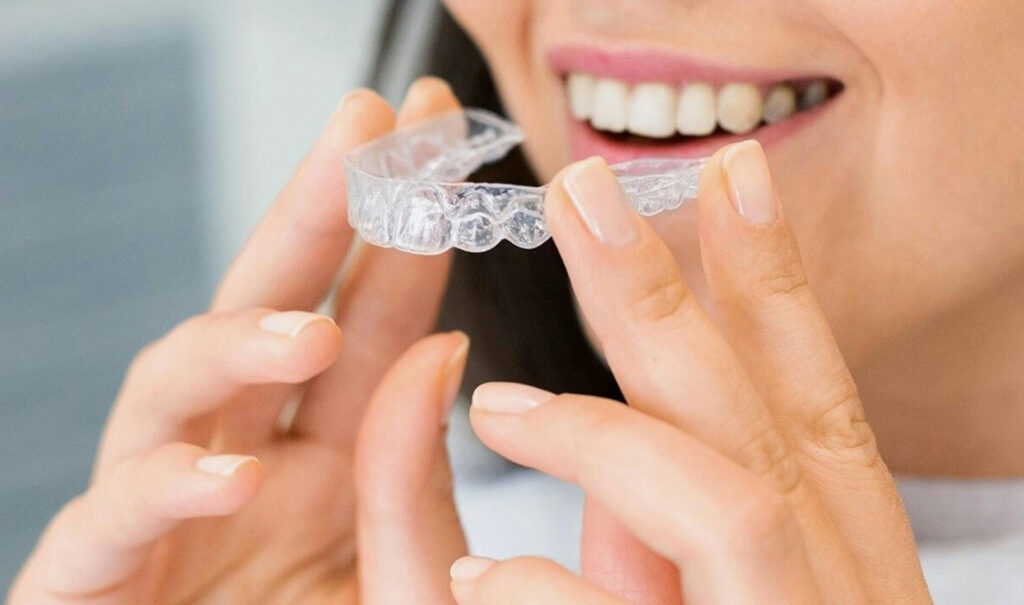
People often arrive at an orthodontic consultation with the same hope wrapped in different words: can I straighten my teeth without metal braces, and will it actually fix the bite problem, not just make the front teeth look nicer? That question matters because overbite, underbite, and crowding are not cosmetic labels. They affect how teeth wear, how the jaw functions, how easy it is to clean the mouth, and sometimes even how comfortably a person eats or speaks.
Invisalign has become the name most patients use for clear aligner treatment in general, and for good reason. It is discreet, removable, and far more sophisticated than the early versions of clear trays many people still imagine. But the honest answer is not a simple yes or no. Invisalign can fix many cases of overbite, underbite, and crowding, sometimes very well. It can also fall short when the bite problem is severe, skeletal, or poorly suited to removable aligners. The details matter.
What Invisalign can actually do
At its core, Invisalign moves teeth through a planned series of clear plastic aligners. Each aligner is designed to shift selected teeth a small amount. Over time, those small movements add up. In experienced hands, that system can do much more than mild straightening. Teeth can be tipped, rotated, intruded, extruded, expanded within limits, and coordinated between the upper and lower arches.
The important phrase there is “in experienced hands.” Invisalign is a tool, not a diagnosis. The same product can deliver excellent results for one patient and disappointing results for another depending on case selection, treatment planning, compliance, and whether the problem is really dental, skeletal, or a mix of both.
A useful way to think about it is this: Invisalign is often excellent for moving teeth. It is less powerful than people assume when the https://penzu.com/p/44f7e04ee2a7e04b issue comes from jaw position itself. If a lower jaw is structurally very far forward or very far back relative to the upper jaw, aligners alone may improve the bite but may not fully correct the underlying discrepancy.
Understanding the difference between tooth problems and jaw problems
This distinction is where many online summaries become too simplistic. A person may be told they “have an overbite,” but that phrase can describe very different things.
One person has upper front teeth that overlap the lower teeth too much because the teeth are tipped or crowded. Another has a small lower jaw, so the front teeth overlap deeply because the skeletal relationship is off. Both may use the same everyday term, but the treatment options are not the same.
The same is true for underbite. In one patient, the lower front teeth sit ahead of the upper front teeth because the upper teeth are tipped inward and the lower teeth outward. In another, the lower jaw is significantly more prominent than the upper jaw. The first case may respond well to aligners. The second may require braces, growth modification in younger patients, or even surgery in adults if the goal is full correction rather than camouflage.
Crowding also comes in degrees. Mild crowding may need only careful alignment and a little enamel reshaping between teeth. Moderate crowding can often be treated with arch coordination, expansion within safe boundaries, or strategic space creation. Severe crowding may force harder choices, especially if the bite is already unstable or the bone support is thin.
Can Invisalign fix an overbite?
Yes, often, but the word “overbite” needs clarification. Clinically, people sometimes mix up overbite and overjet. Overbite describes the vertical overlap of the upper front teeth over the lower front teeth. Overjet refers to how far the upper front teeth project forward horizontally. Many patients have both, and they are treated differently.
Invisalign can be very effective for mild to moderate deep bites, especially when the issue is mostly dental. For example, if the lower front teeth are over-erupted, or the upper incisors are tipped in a way that increases overlap, aligners can be programmed to intrude certain teeth and level the bite. Bite ramps, small built-in features on the aligners placed behind the front teeth, are commonly used to help unlock a deep bite and create room for movement.
This is one of those areas where clear aligners have become much better over time. Years ago, many orthodontists were skeptical about deep bite correction with aligners. That skepticism was understandable. Some movements were less predictable, and treatment software was less refined. Today, with attachments, elastics, bite ramps, and better sequencing, many deep bite cases are entirely realistic with Invisalign.
Still, not every overbite is a great aligner case. If the bite is very deep and the lower jaw posture is constrained by the front teeth, comprehensive treatment may be more efficient with braces, especially in younger patients. If the root positions, jaw shape, and smile arc require complex vertical control, fixed appliances may offer tighter control. Invisalign can still be part of the plan, but it may not be the easiest path.
A common real-world example is the adult patient who has worn the edges of the lower front teeth because the upper teeth cover them too much. If that wear stems from a dental deep bite rather than a severe skeletal problem, Invisalign can often improve both appearance and function. The catch is that treatment must be designed to create a stable end point, not just line up the visible front teeth.
Can Invisalign fix an underbite?
Sometimes, yes. Predictably, it depends on why the underbite exists.
A mild underbite caused mainly by tooth position can often be improved with Invisalign. If the upper teeth need to be brought slightly forward, the lower teeth slightly back, or both arches coordinated better, aligners can do that. Crossbite correction in selected cases is also possible, especially when elastics are used to guide the bite.
Where things become difficult is the true skeletal underbite. If the lower jaw is substantially ahead of the upper jaw, aligners cannot move the jawbones into a new relationship in a non-growing adult. They can camouflage the discrepancy to a degree, but camouflage has limits. There comes a point where pushing teeth beyond ideal positions to disguise a jaw imbalance is neither esthetic nor healthy.
Younger patients are a different category. In children and adolescents who are still growing, orthopedic treatment may help guide jaw development. That usually involves appliances other than Invisalign, at least during part of treatment. By the time many adults seek correction, the growth window has closed, so the options narrow to camouflage or surgery, with or without aligners.
One point patients appreciate hearing clearly is this: “Can Invisalign help?” and “Can Invisalign fully fix it?” are not always the same question. A mild underbite may be fully corrected. A moderate skeletal underbite may be improved enough to function better and look better, but not normalized completely. Good treatment planning means setting that expectation before the first aligner is made.
Can Invisalign fix crowding?
Crowding is arguably the condition clear aligners are most commonly used to treat, and in many cases they do it very well. Mild and moderate crowding are often ideal Invisalign cases. The trays apply controlled forces, and because patients can see the sequence, compliance tends to be strong when the cosmetic motivation is high.
The challenge comes when crowding is significant and space is limited. Teeth cannot be aligned into an already full arch without creating space somewhere. That space can come from several sources: slight expansion, reducing tiny amounts of enamel between teeth, moving teeth backward if anatomy allows, or removing teeth in selected cases.
This is where the internet can oversell “non-extraction” treatment. Patients understandably prefer to avoid extractions, but not every crowded mouth benefits from forcing all teeth into place without enough room. Done carelessly, that approach can push teeth outside the supporting bone, create gum recession risk, flare incisors unattractively, or leave the bite unstable.
Invisalign can handle extraction cases too, but these are more complex. Closing extraction spaces and controlling root positions often require excellent planning, attachments, elastics, and patient consistency. Some orthodontists manage these cases beautifully with aligners. Others prefer braces for greater control. Both approaches can be valid.
One pattern I see repeatedly is the adult who had crowding ignored for years because “it was only cosmetic.” Then the lower front teeth become increasingly difficult to floss, plaque builds, gum inflammation worsens, and one tooth starts to chip because it is taking forces at the wrong angle. Straightening those teeth is not vanity. It is often preventive care.
When Invisalign works especially well
There are a few situations where Invisalign tends to shine. These are not guarantees, but they are encouraging signs during case assessment.
- Mild to moderate crowding without major jaw imbalance
- Deep bite or crossbite that is primarily dental rather than skeletal
- Adults who will wear aligners faithfully for 20 to 22 hours a day
- Patients with good gum health and realistic expectations
- Cases supported by attachments, elastics, or refinements when needed
The compliance point deserves emphasis. Unlike braces, Invisalign only works when it is in the mouth. The aligners cannot move teeth from a nightstand. Many treatment disappointments blamed on the system are really wear-time problems. Missing a few hours here and there matters less than making a habit of inconsistent wear over months.
What Invisalign cannot always do on its own
This is the part many marketing pages gloss over. Invisalign is powerful, but it is not magic.
Severe skeletal overbites and underbites may need a combination of orthodontics and jaw surgery if the goal is full correction. Impacted teeth, major rotations, significant vertical discrepancies, and complicated extraction mechanics can all be harder with aligners. Not impossible, just less forgiving.
There is also the issue of predictability versus possibility. A movement may be theoretically possible in software but less reliable in a living mouth. Teeth vary in root shape, bone density, and response to force. Trays fit plastic models perfectly. Human biology is messier. That is why refinements are common. The first series gets much of the way there, then additional aligners fine-tune the result.
Patients sometimes worry that refinements mean failure. Usually they do not. They are a normal part of high-quality treatment, especially in bite correction. The more important question is whether the original diagnosis and plan were appropriate.
The role of attachments, elastics, and “extras”
If you picture Invisalign as invisible trays slipping over teeth with no other visible features, that image is incomplete. Many successful bite corrections depend on auxiliaries.
Attachments are small tooth-colored shapes bonded to the teeth. They give the aligner something to grip. Elastics, small rubber bands connecting upper and lower teeth, can help correct bite relationships. Bite ramps can open a deep bite. Occasionally small temporary anchorage devices, often called TADs, may be used in advanced cases to provide extra control, though this is more specialized.
Patients are sometimes disappointed to learn that “clear aligner treatment” may still involve little buttons, hooks, or elastics. But these additions are often what make Invisalign capable of treating more than simple crowding. They are a practical compromise. Slightly less invisible, much more effective.
How case severity changes the answer
If you ask five people whether Invisalign can fix an overbite, you may hear five contradictory answers because they are talking about five different severities.
A mild overbite with slight crowding is not in the same category as a severe deep bite with lower incisor trauma. A mild underbite involving a couple of front teeth is not the same as a pronounced Class III skeletal pattern. Mild to moderate crowding differs enormously from a situation where teeth overlap so heavily that roots and gum support become part of the planning challenge.
That is why free online smile simulations can be misleading. They may show what the front teeth could look like if aligned, but they do not always address whether the molars fit properly, whether the roots are controlled, whether the facial profile changes favorably, or whether the result is stable long term.
A proper orthodontic evaluation looks beyond the selfie angle. It considers X-rays, bite relationship, gum condition, bone levels, facial proportions, wear patterns, joint symptoms, and patient habits. Mouth breathing, tongue posture, clenching, and prior dental work all affect planning more than most people realize.
Invisalign versus braces for these problems
Patients usually want a side-by-side answer. Which is better?
The honest answer is that better depends on the case and the doctor’s skill with each system. Braces offer constant force and do not rely on patient wear time. They can be more efficient for difficult rotations, major vertical changes, and complex extraction mechanics. Invisalign offers superior esthetics, easy hygiene access, and often a more comfortable day-to-day experience.
For overbite, underbite, and crowding, the decision often comes down to biomechanics and behavior. If a patient is disciplined and the case is well suited, Invisalign can perform extremely well. If the case is highly complex or the patient is likely to remove trays frequently, braces may be the wiser choice.
One practical detail matters here: adults with busy jobs often succeed with Invisalign because they are motivated by appearance and can manage a routine. Teenagers are more variable. Some wear aligners beautifully. Others lose trays, snack constantly, or leave aligners out during sports and social events. The best appliance on paper is the wrong appliance if it will not be used properly.
Questions worth asking at a consultation
A good consultation should leave you with a clear picture of whether the plan addresses the actual bite problem or just the visible crowding.
- Is my issue mainly dental, skeletal, or both?
- Can Invisalign fully correct it, or only improve it?
- Will I need attachments, elastics, or refinements?
- Are extractions or enamel reduction part of the plan?
- What does stability look like, and what retainer plan follows treatment?
Those questions tend to shift the conversation from marketing to medicine. They also reveal whether the provider has thought through the mechanics rather than assuming aligners are the answer to every case.
Treatment time and what patients should realistically expect
Treatment length varies widely. Mild crowding may take six to nine months. Moderate bite correction often falls in the 12 to 18 month range. More complex cases can take longer, especially if refinements are needed. Severe skeletal discrepancies can involve a much longer path if surgery or staged treatment enters the picture.
It also helps to know that teeth do not move on a perfect schedule. A tray may fit beautifully for ten stages, then one stubborn tooth falls behind. That does not necessarily signal a bad plan. It may mean the tooth needs a new scan, a revised movement sequence, or more time. Orthodontics is controlled biology, not factory assembly.
Retention matters just as much as active treatment. Teeth with prior crowding, especially lower front teeth, have a strong tendency to relapse. If someone completes Invisalign and then wears retainers casually, they should not be surprised if alignment drifts. Long-term retainer use is part of the treatment, not an optional extra.
The hidden factor, gum and bone health
There is another reason a consultation should be thorough. Adults seeking Invisalign often already have recession, bone loss, old fillings, crowns, or uneven wear. Moving teeth through compromised support requires judgment. Sometimes the right answer is to treat gum disease first, adjust expectations, or coordinate with a periodontist and restorative dentist.
This is especially relevant in crowding. Tightly overlapped lower incisors often sit in thin bone. If they are expanded or flared carelessly, the gums can suffer. Good orthodontics respects the envelope of bone support. A straighter arch is not a success if the soft tissue pays the price.
Likewise, correcting a bite may uncover restorative needs. Once the teeth are in better positions, chipped edges may need bonding, worn teeth may need reshaping, and old crowns may fit differently into the new occlusion. The best outcomes often come from treating the mouth as a system rather than a row of isolated teeth.
So, can Invisalign fix overbite, underbite, and crowding?
For many patients, yes. Invisalign can correct a surprising range of overbites, underbites, and crowded teeth, especially when the problem is moderate and primarily dental. It can also improve some more complex bites when used with attachments, elastics, and careful planning.
But there is a line beyond which aligners become a compromise rather than the ideal solution. Severe skeletal discrepancies, difficult extractions, and highly complex tooth movements may call for braces, surgery, or a hybrid approach. The trays themselves do not decide that. Diagnosis does.
If you are considering Invisalign, the most useful goal is not simply “clear aligners instead of braces.” The better goal is “the right treatment for my bite, with a realistic picture of what it can and cannot achieve.” When that conversation is honest, patients usually end up happier, whether the final recommendation is Invisalign, braces, or something more comprehensive.
A well-planned case can do far more than straighten a smile for photos. It can reduce wear, improve function, make hygiene easier, and create a bite that feels balanced when you chew. That is the real standard to judge any orthodontic treatment by. Invisalign is often capable of meeting it. Sometimes it is the best option. Sometimes it is not. Knowing the difference is what good orthodontic care is all about.
Omni Dental Specialty
Address: 1690 E Gonzales Rd, Oxnard, CA 93036
Phone number: +18053666000
FAQ About Invisalign
How much does Invisalign actually cost?
The out-of-pocket cost for Invisalign typically ranges between $3,000 and $8,000, with most patients paying a national average of roughly $5,100 to $5,700 before insurance.
What is the downside to Invisalign?
The biggest downsides to Invisalign are the intense discipline required to wear the trays 22 hours a day, the inconvenience of removing them to eat or drink, and the inability to fix severe, complex orthodontic issues.
Is $5000 a lot for Invisalign?
No, $5,000 is not considered a lot for Invisalign; it is exactly the national average. Treatment costs typically fall between $3,000 and $8,000, and $5,000 is the standard fee for a moderately complex case that takes 6 to 18 months to complete.